Cassia - Senna pendula
|
Origin
Behaviour Description Dispersal Removal Follow-up |
South America. Cultivated as a garden ornamental. |
Origin: South America. Cultivated as a garden ornamental.
Behaviour: Cassia is a weed of waterways, gardens, disturbed sites, waste areas, roadsides, closed forests, forest margins and urban bushland in tropical, sub-tropical and warmer temperate regions. It is regarded as a significant environmental and noxious weed.
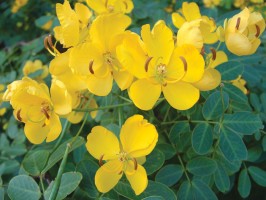
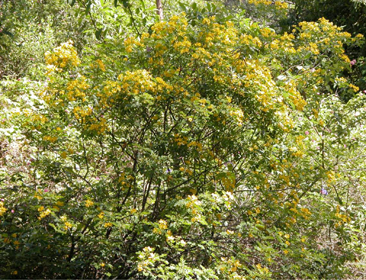
Description: It is a straggly woody plant that grows to 2-4 m. The leaves are opposite and have rounded tips. It flowers in late summer with a show of bright yellow flowers.
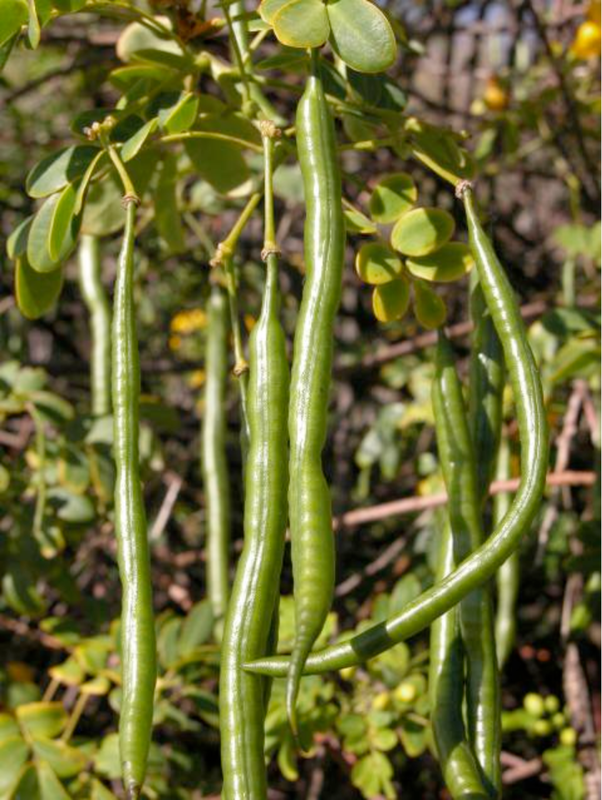
Dispersal: The seeds come in long bean-like seed pods. They are quite hardy, surviving for several years, and are easily spread by soil dispersal (gardening or roadworks) and by birds and animals.
Removal: Young plants can be fairly easily be pulled out. Larger plants with thick or multiple stems will need to be cut and painted with poison.
Follow-up: Not essential. Growth from seeds is slow
Behaviour: Cassia is a weed of waterways, gardens, disturbed sites, waste areas, roadsides, closed forests, forest margins and urban bushland in tropical, sub-tropical and warmer temperate regions. It is regarded as a significant environmental and noxious weed.
Description: It is a straggly woody plant that grows to 2-4 m. The leaves are opposite and have rounded tips. It flowers in late summer with a show of bright yellow flowers.
Dispersal: The seeds come in long bean-like seed pods. They are quite hardy, surviving for several years, and are easily spread by soil dispersal (gardening or roadworks) and by birds and animals.
Removal: Young plants can be fairly easily be pulled out. Larger plants with thick or multiple stems will need to be cut and painted with poison.
Follow-up: Not essential. Growth from seeds is slow