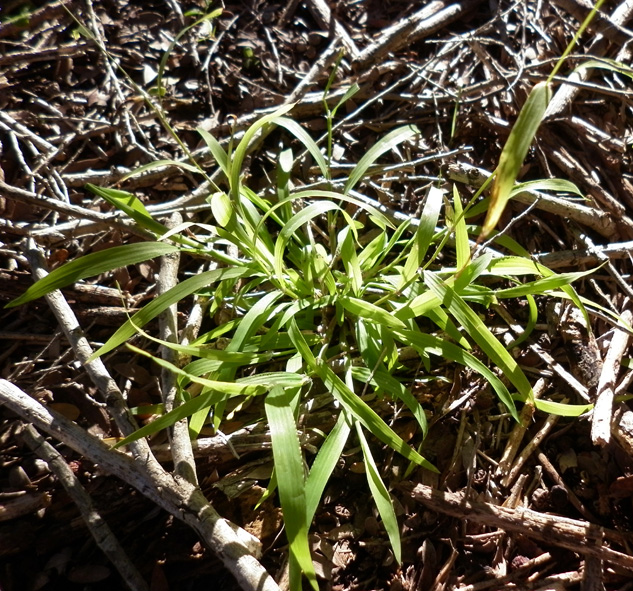
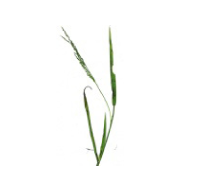
Ehrhata, panic Veldt Grass - Ehrharta Erecta

|
Origin
Behaviour Description Leaves Seeds Removal Follow-up |
South Africa |
Origin: South America. It was imported as a garden plant because of its colourful flowers and has escaped to become a mojor weed.
Behaviour: Lantana is a weed of National significance due to its ability to invade native bush. It forms dense thickets.
Description: A multi-branched woody shrub 2-4m tall that forms dense thickets. The stems have sharp hairs.
Leaves: Oval, 20-100mm long and grow in opposing pairs along the stem.
Flowers: small, bright and often multi cloured.
Seeds: grow in clumps and turn from green to red as they mature.
Dispersal: Mainly through seed dispersal, aided by birds and foxes. Seeds do not have a high germination rate. Lantana can also spread by stems that are lying on the ground taking root
Removal: Hand removal: Cut the stems back towards the roots leaving them where they fall or collecting them into piles. Pull the roots out by hand or dig them out with a mattock.
Poisoning: Low concentrations of glyphosate can kill lantana when effectively sprayed.
Fire: Fire will kill even mature plants if it is hot enough.
Follow-up: Essential. Small plants are easily identified and come up easily when pulled. Check piles of stems as they can grow roots again.
Behaviour: Lantana is a weed of National significance due to its ability to invade native bush. It forms dense thickets.
Description: A multi-branched woody shrub 2-4m tall that forms dense thickets. The stems have sharp hairs.
Leaves: Oval, 20-100mm long and grow in opposing pairs along the stem.
Flowers: small, bright and often multi cloured.
Seeds: grow in clumps and turn from green to red as they mature.
Dispersal: Mainly through seed dispersal, aided by birds and foxes. Seeds do not have a high germination rate. Lantana can also spread by stems that are lying on the ground taking root
Removal: Hand removal: Cut the stems back towards the roots leaving them where they fall or collecting them into piles. Pull the roots out by hand or dig them out with a mattock.
Poisoning: Low concentrations of glyphosate can kill lantana when effectively sprayed.
Fire: Fire will kill even mature plants if it is hot enough.
Follow-up: Essential. Small plants are easily identified and come up easily when pulled. Check piles of stems as they can grow roots again.