Life in the sandy beaches
No-one thinks ‘food’ when they look at sand, yet the sandy beaches that fringe our coast are an important component of the marine food web. Every beach is unique and is determined by the geology of the surrounding area, the geological age of the region and the prevailing currents and conditions.
In the spaces between the sand grains tiny microscopic life exists. (Picture a stack of tennis balls – the balls represent the sand grains, but look at all that space between!) Tardigrades, Dinoflagellates, Copepods and Rotifers reside here in vast numbers along with thousands of other organisms collectively known as Meiofauna.
The larger sand-dwelling marine organisms we know, such as pipis, beach worms and crabs, rely on this microscopic life, as do many juvenile fish. Small things get eaten by bigger things, which are eaten by bigger things still.
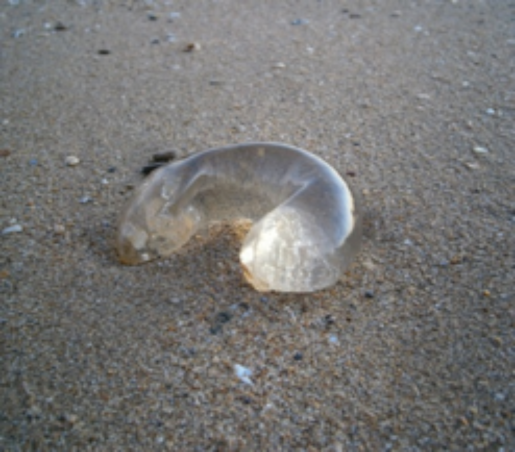
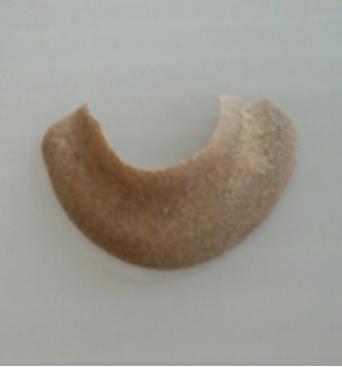
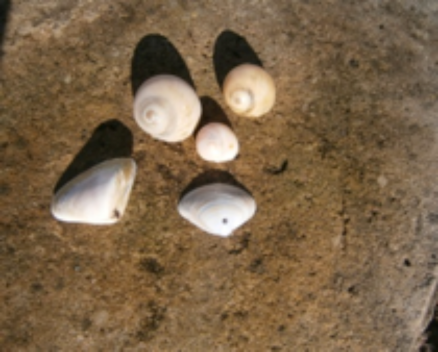
One of the predators beneath the sand is the Moon Snail (Polinices and Natica species). They prey upon pipis and clams. When you pick up a shell on the beach, look to see if it has a small, round hole in it. If so, it was the meal of a Moon Snail. You may also come across the Moon Snail egg masses washed up along the shore. Different species have different shaped masses – one is a blob of jelly in a crescent moon shape, the other is known as a ‘sand collar’. Look closely, thousands of eggs are to be found within them.
So, next time you walk along the beach – tread lightly, you’re stepping on an eco-system!
Jeannie Lawson
In the spaces between the sand grains tiny microscopic life exists. (Picture a stack of tennis balls – the balls represent the sand grains, but look at all that space between!) Tardigrades, Dinoflagellates, Copepods and Rotifers reside here in vast numbers along with thousands of other organisms collectively known as Meiofauna.
The larger sand-dwelling marine organisms we know, such as pipis, beach worms and crabs, rely on this microscopic life, as do many juvenile fish. Small things get eaten by bigger things, which are eaten by bigger things still.
One of the predators beneath the sand is the Moon Snail (Polinices and Natica species). They prey upon pipis and clams. When you pick up a shell on the beach, look to see if it has a small, round hole in it. If so, it was the meal of a Moon Snail. You may also come across the Moon Snail egg masses washed up along the shore. Different species have different shaped masses – one is a blob of jelly in a crescent moon shape, the other is known as a ‘sand collar’. Look closely, thousands of eggs are to be found within them.
So, next time you walk along the beach – tread lightly, you’re stepping on an eco-system!
Jeannie Lawson